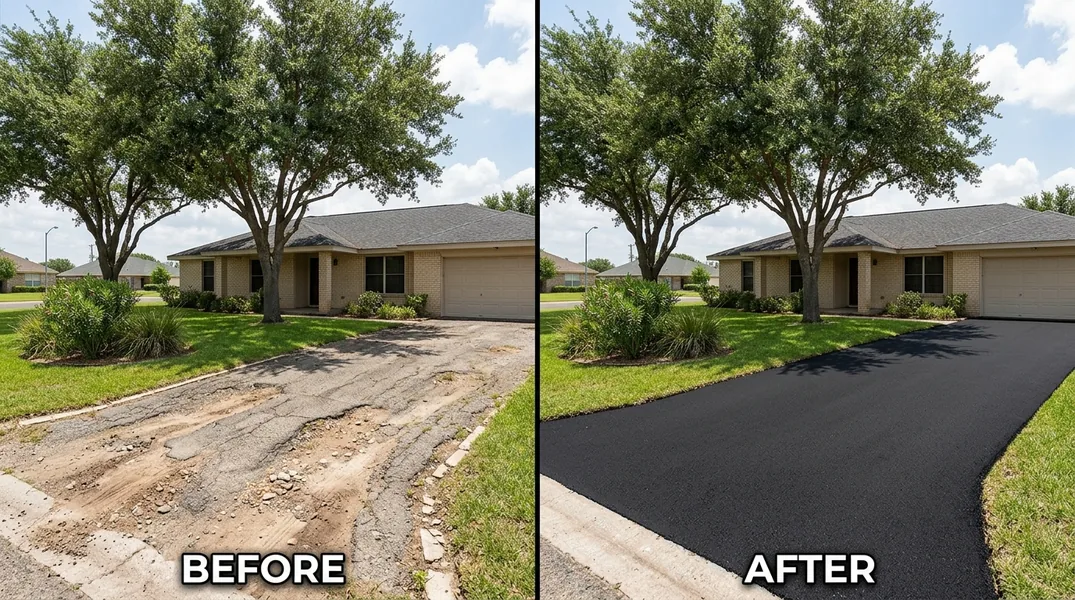
Understanding Delta Clay and Your Driveway
If you've lived in McAllen for more than a few years, you've probably noticed something frustrating: your driveway seems to develop cracks, bumps, and potholes faster than driveways in other parts of Texas. This isn't just bad luck or poor installation. The culprit is delta clay, a soil type that dominates the Rio Grande Valley and behaves very differently from the compacted soils found in other regions.
Delta clay is expansive soil, meaning it swells when it absorbs water and shrinks when it dries out. During McAllen's humid summers and after heavy rainfall, this clay absorbs moisture and expands upward. When the dry season arrives, it contracts, leaving voids beneath your asphalt. These cycles of expansion and contraction create movement that asphalt simply cannot tolerate. The result is a driveway that shifts, settles unevenly, and eventually cracks under its own weight and the pressure of vehicles passing over it.
How Frost Heave and Settling Damage Your Asphalt
While McAllen doesn't experience the deep freezes that plague northern states, frost heave driveway repair is still a real concern in the Valley. Frost heave occurs when moisture in the soil freezes and expands, lifting the ground beneath your driveway. Even mild freezing temperatures (which do happen occasionally in winter) can trigger this process. The freeze-thaw cycle, though less severe than in colder climates, still pushes upward on your asphalt, creating pressure points that lead to cracking and buckling.
Settling is equally destructive. As delta clay contracts during dry periods, the soil beneath your driveway compacts unevenly. Some areas settle more than others, creating low spots and high spots across the surface. This differential settling is why you might notice one section of your driveway is higher or lower than an adjacent section. Over time, these uneven surfaces become stress points where cracks initiate and spread. Water seeps into these cracks, accelerates the breakdown of the asphalt base, and the problem accelerates exponentially.
The Progressive Damage Cycle: From Cracks to Potholes
The journey from a small crack to a major pothole is faster than most homeowners expect. It starts innocently enough: a hairline crack appears on the surface, often following a pattern that reflects the soil movement beneath. You might ignore it for a few months, thinking it's cosmetic. But in the Valley's climate, that crack is a gateway for water infiltration. During the next heavy rain, water seeps down into the asphalt layers and the subgrade, weakening the structural integrity of your driveway.
Once water gets underneath, the damage accelerates. The base layer begins to deteriorate, and the asphalt loses its support. Vehicle weight pushes down on the weakened area, and pieces of asphalt break free. What started as a crack becomes a small spall, then a shallow depression, then a full pothole. At this stage, Pothole Repair & Asphalt Patching can stop the spread, but only if you act quickly. Waiting too long means the damage spreads laterally, and you'll end up needing more extensive Driveway Repair or even a full replacement.
When to Repair vs. When to Replace Your Driveway
The decision to repair or replace asphalt driveway comes down to the extent of damage and the cost-benefit analysis. If your driveway has isolated potholes, a few cracks, or surface deterioration covering less than 30 percent of the area, targeted repairs are usually the right choice. Pothole Repair & Asphalt Patching services can address these issues effectively and are significantly less expensive than a full replacement. Professional patching also prevents water infiltration and stops the damage cycle in its tracks.
However, if your driveway shows widespread cracking (often called alligatoring), significant settling, multiple large potholes, or if repairs have been needed repeatedly in the past three years, replacement may be the more economical choice long-term. A new Asphalt Driveway Paving & Installation job, properly graded and compacted over stable soil preparation, will last 15 to 20 years with regular maintenance. By contrast, repeatedly patching a failing driveway can cost nearly as much over time while providing only temporary relief.
The best way to know which option makes sense for your situation is to have a professional assessment. McAllen Asphalt Paving can inspect your driveway, identify the root causes of damage, and recommend the most cost-effective solution. Call us at (956) 578-6392 or request a free estimate today.
Prevention Strategies: How to Protect Your Driveway from Delta Clay Movement
The best defense against delta clay damage is prevention. Proper drainage is your first line of defense. Water that pools on or near your driveway accelerates soil expansion and contraction. Make sure your driveway is graded to slope away from structures, and consider installing or improving drainage systems around the perimeter. Gutters and downspouts should direct water away from the driveway, not toward it. In areas prone to standing water, a French drain or permeable base can help manage moisture.
Second, seal your asphalt regularly. A quality seal coat creates a barrier against water infiltration, extending the life of your driveway significantly. Seal coating should be done every two to three years in McAllen's climate. This simple maintenance step is inexpensive compared to the cost of major repairs and can add years to your driveway's lifespan. Third, address small damage immediately. When you notice a crack or small pothole, don't wait. Early intervention with patching prevents the damage from spreading and keeps repair costs manageable.
Finally, consider soil stabilization if you're planning a new driveway installation. Modern soil stabilization techniques can reduce the effects of delta clay movement, making your new asphalt more resilient. When you invest in Asphalt Driveway Paving & Installation, ask your contractor about these options to maximize durability.
Getting Professional Help: Asphalt Driveway Services Near Me
Managing delta clay damage requires expertise specific to the Rio Grande Valley's unique soil conditions. General contractors from other regions may not fully understand how local soil behaves or how to design driveways that withstand these challenges. That's why working with a local asphalt company familiar with McAllen's conditions is so important.
McAllen Asphalt Paving specializes in driveway solutions designed for the Valley's delta clay environment. Whether you need immediate Pothole Repair & Asphalt Patching, comprehensive Driveway Repair, or a complete new installation, we understand the local soil dynamics and design accordingly. Our team uses proven techniques to ensure proper base preparation, compaction, and drainage that stand up to the Valley's climate and soil conditions.
Don't let delta clay damage continue to worsen. Contact McAllen Asphalt Paving at (956) 578-6392 or visit our website to request a free estimate. We'll assess your driveway's condition, explain what's causing the damage, and provide a clear recommendation for the best repair or replacement solution for your property.
Looking for a professional asphalt paving contractor in McAllen? McAllen Asphalt Paving responds fast for all your asphalt paving needs.
Get a Free Quote