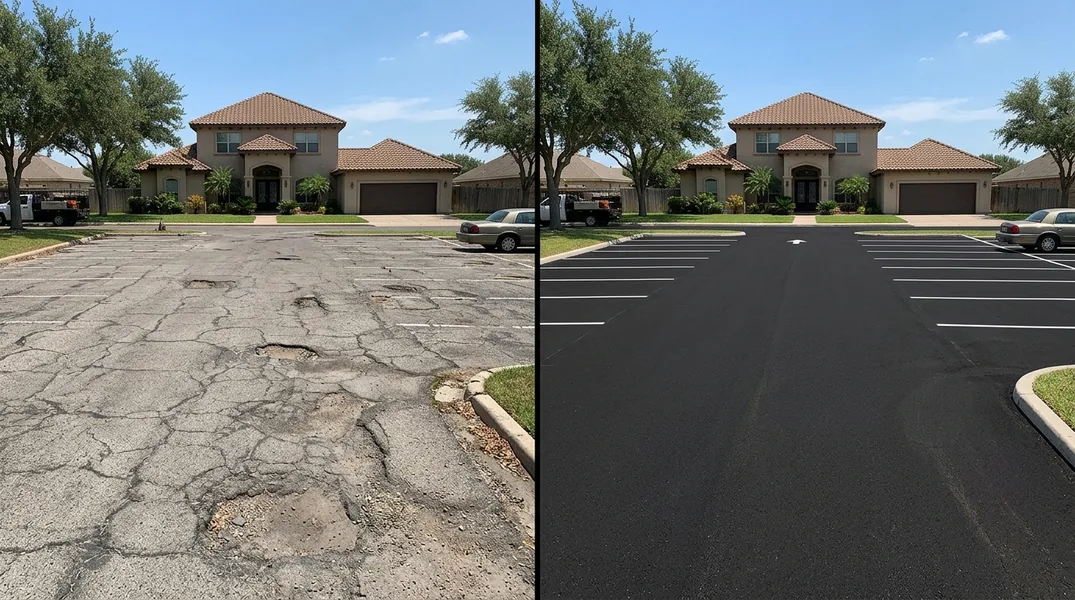
Why Pitch Matters in New Subdivision Driveways
When developers and homeowners invest in new subdivisions across McAllen, one critical detail often gets overlooked: proper driveway pitch. The slope of your driveway isn't just about aesthetics or convenience. It's the foundation of effective water management and long-term asphalt durability. A driveway without adequate pitch becomes a magnet for water pooling, which leads to premature deterioration, cracking, and costly repairs down the road.
The ideal driveway slope is typically between 1 and 2 percent, meaning for every 100 feet of driveway length, the surface should drop 1 to 2 feet in elevation. This gentle grade is steep enough to shed water effectively but shallow enough to remain safe and comfortable for vehicles and pedestrians. In McAllen's subtropical climate, where heavy summer rains and occasional flooding are concerns, getting the pitch right from day one isn't optional. It's essential for protecting your investment and avoiding expensive Driveway Repair bills.
Understanding Water Pooling on Driveway Surfaces
Water pooling on driveway surfaces is one of the most common problems we see in new subdivision projects. When asphalt doesn't have proper slope, rainwater collects in low spots instead of flowing away. This standing water penetrates the asphalt, weakening the base layers and causing expansion and contraction stress. Over time, this leads to potholes, alligator cracking, and surface deterioration that compromises both safety and curb appeal.
The issue becomes especially problematic in McAllen during the rainy season when intense downpours can dump several inches of water in a short period. If your driveway doesn't drain properly, that water has nowhere to go but down into the asphalt structure. Beyond the structural damage, standing water creates safety hazards, encourages algae growth, and can even damage your vehicle. That's why choosing a contractor experienced in proper drainage design during initial Asphalt Driveway Paving & Installation is crucial for new subdivisions.
Driveway Drainage Solutions: French Drains and Trench Drains
When proper pitch alone isn't enough, or when your property's topography presents challenges, driveway drainage solutions like french drains and trench drains become necessary. A driveway french drain is a perforated pipe system installed beneath or alongside the asphalt surface to intercept and redirect groundwater away from the pavement. The pipe is typically surrounded by gravel and landscape fabric, allowing water to enter the system and flow away safely. This solution is particularly valuable in new subdivisions where soil composition or underlying water tables might complicate drainage.
A trench drain driveway system works differently but serves the same purpose. This is a channel drain installed along the edge or across the driveway surface itself, collecting water and directing it to a designated outlet or storm drain system. Trench drains are especially effective for driveways that experience sheet water flow from adjacent properties or where surface grading can't adequately handle rainfall volume. In new subdivision developments, installing these systems during the initial construction phase is far more cost-effective and less disruptive than retrofitting them later. The right driveway drainage solution depends on your property's specific conditions, soil type, and local drainage infrastructure.
Asphalt Driveway Paving & Installation Near Me: When to Call a Professional
New subdivision homeowners often face a critical decision: hire an experienced asphalt contractor from the start, or attempt to save money with a less experienced option. This choice has profound implications for your driveway's longevity and your home's overall value. Professional contractors understand the nuances of proper pitch, base preparation, compaction, and drainage integration. They know how to assess your property's unique challenges and design a solution that works specifically for your site conditions. McAllen Asphalt Paving has served the community with expertise in these exact scenarios, helping new subdivision developments get it right from day one.
When you're evaluating contractors for your new driveway, ask about their experience with drainage solutions and their approach to pitch and grading. A reputable contractor will walk you through their process, explain how water will be managed, and provide references from other subdivision projects they've completed. Don't hesitate to get a free estimate from multiple contractors so you can compare their approaches and expertise. Call McAllen Asphalt Paving at (956) 578-6392 to discuss your subdivision driveway project and learn how proper planning prevents costly problems.
Common Mistakes in New Subdivision Driveway Design
Many new subdivision driveways fail prematurely because of preventable design errors made during the planning phase. One common mistake is insufficient pitch, often the result of contractors trying to minimize grading costs or working from inadequate site surveys. Another frequent error is failing to account for water flowing from adjacent properties or from the house roof itself. Some developers don't consider the long-term settling of fill material, which can change the driveway's slope over time and create new drainage problems. Additionally, not properly preparing the subbase or using inadequate compaction leads to uneven settling and water infiltration.
Poor coordination between drainage systems and asphalt installation is another pitfall. If french drains or trench drains aren't properly integrated with the driveway design, they become ineffective or even problematic. Some contractors also fail to account for local soil conditions, which can significantly impact drainage performance. In McAllen's environment, understanding how clay-heavy soils interact with water is essential. These mistakes often require expensive Asphalt Resurfacing & Overlay or complete reconstruction within just a few years. Working with an experienced local contractor who understands regional conditions helps you avoid these costly errors.
Planning Ahead: Questions to Ask Before Installation Begins
Before your driveway installation begins in your new subdivision, you should have clear answers to several critical questions. First, what is the existing slope of your property, and how will it be modified for proper drainage? Second, where will water flow once it leaves your driveway, and is that outlet adequate for heavy rainfall? Third, what is the soil composition at your site, and how does it affect drainage? Fourth, are there any underground utilities or existing drainage systems you need to work around? Finally, what warranty or guarantee does your contractor provide for proper drainage performance? These questions ensure everyone is on the same page before work begins.
A thorough site assessment by your contractor should address all these issues and result in a detailed grading and drainage plan specific to your property. This plan becomes your roadmap for successful installation and long-term performance. Don't skip this planning phase or assume your contractor has already figured it all out. Take time to review the plan, ask questions, and understand exactly how your driveway will shed water. If you're ready to move forward with a professional assessment for your new subdivision driveway, contact McAllen Asphalt Paving today at (956) 578-6392 or request a free estimate to discuss your project in detail.
Looking for a professional asphalt paving contractor in McAllen? McAllen Asphalt Paving responds fast for all your asphalt paving needs.
Get a Free Quote